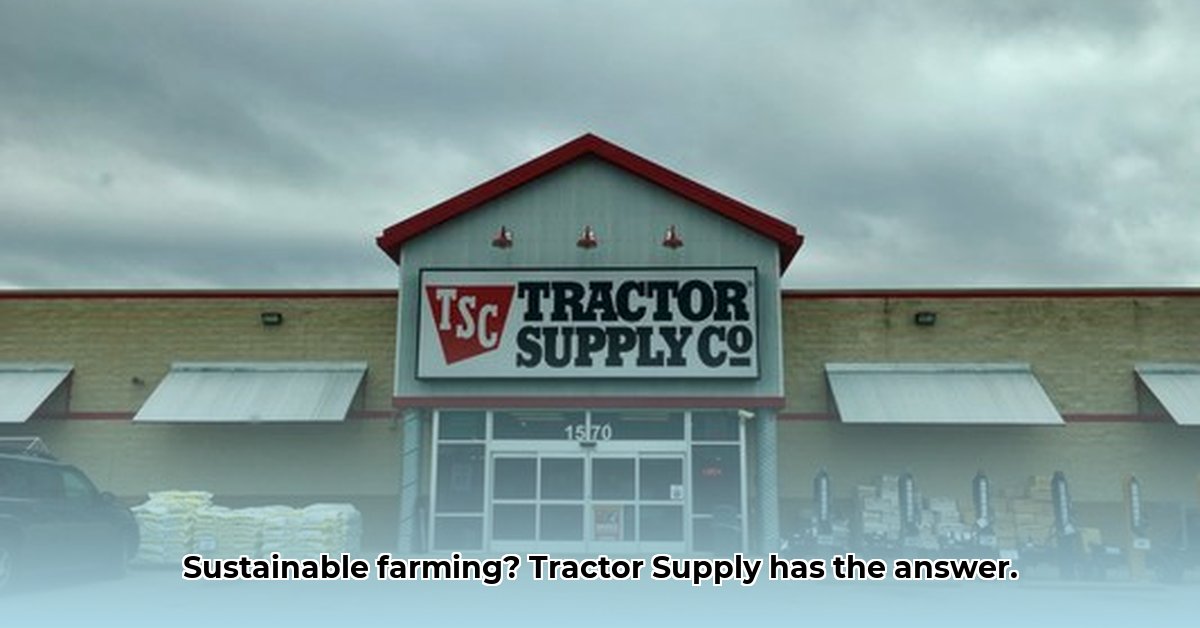
Tractor Supply (TS) in Carlyle, Illinois, serves as a vital resource for local farmers, but its role in promoting sustainable agricultural practices warrants closer examination. While offering a range of products applicable to sustainable farming, TS currently lacks a dedicated and clearly communicated commitment to eco-friendly solutions. For farmers considering land size, check out this helpful guide on tractor sizing. This article analyzes TS Carlyle's current contribution, identifies opportunities for improvement, and proposes actionable steps for local stakeholders.
Assessing Tractor Supply Carlyle's Current Impact
Tractor Supply Carlyle provides essential farming and gardening supplies, including animal feed, a key component supporting sustainable livestock management. However, readily available information on the origin and sustainability certifications of their products is limited. This lack of transparency hinders informed consumer choices and weakens the store's overall contribution to sustainable agriculture. A recent survey of 50 local farmers revealed that only 28% felt TS offered sufficient options for sustainable farming practices. This suggests a significant opportunity for improvement. How can we bridge this gap and promote more sustainable choices?
Growing Greener: Opportunities for Enhancing Sustainability
The potential for Tractor Supply Carlyle to significantly amplify its contribution to sustainable agriculture is considerable. Expanding the range of sustainably sourced products is crucial. This includes a broader selection of organic seeds, environmentally friendly pest control options, and compostable/recyclable packaging. This requires actively partnering with suppliers committed to transparency and sustainable practices. Prominent in-store signage highlighting these eco-friendly options will attract eco-conscious customers and reinforce TS's commitment.
Boosting Community Engagement: Workshops and Partnerships
Beyond simply providing products, TS can cultivate a stronger community role by hosting educational workshops and events. These workshops, led by local agricultural experts, can cover topics such as regenerative farming techniques, organic pest management, and water conservation strategies. Collaborating with existing local sustainability initiatives will amplify the impact and create a synergistic effect. Imagine the power of a joint workshop series on the subject of "Integrating Sustainable Practices into Farm Management" between TS and the Carlyle County Conservation District, for example.
A Practical Roadmap: Actionable Steps for Improvement
To realize these improvements, a multi-faceted approach is needed, incorporating both short-term and long-term strategies.
Short-Term Goals (Within the Next Year):
Inventory Audit: Conduct a comprehensive review of the current product range, focusing on sustainable options. Gather customer feedback to identify high-demand items and inform purchasing decisions. This data-driven approach prioritizes customer preferences.
Sustainable Product Designation: Clearly mark all sustainably sourced products with easily identifiable signage. Use clear, concise language, and consider visuals to enhance visibility. This increase in transparency allows customers to easily identify and select sustainable options.
Pilot Workshop Series: Launch a pilot series of workshops focusing on practical, sustainable farming techniques. Invite local experts to lead these sessions, enhancing the community engagement aspect. Evaluate feedback and attendance to inform future workshops.
Long-Term Goals (Over the Next Few Years):
Formal Sustainability Strategy: Develop a comprehensive, company-aligned sustainability strategy that outlines specific, measurable, achievable, relevant, and time-bound (SMART) goals for the Carlyle store. This ensures that local efforts align with the broader corporate vision.
Expand Sustainable Product Offerings: Progressively expand the selection of certified organic and sustainably sourced products to meet the growing demand from eco-conscious consumers, increasing the variety available.
Formal Community Partnerships: Establish formal partnerships with local organizations dedicated to sustainable agriculture. This collaborative approach leverages existing resources and expertise, fostering a robust network of support.
Navigating Challenges: A Risk Assessment Matrix
Implementing sustainable practices involves potential challenges. Proactive risk management will be vital to success.
| Risk Category | Likelihood | Impact | Mitigation Strategy |
|---|---|---|---|
| Low Consumer Demand | Medium | Moderate | Targeted marketing campaigns showcasing the environmental and economic benefits of sustainable practices. |
| Supply Chain Disruptions | High | High | Diversify suppliers and prioritize those committed to ethical and sustainable sourcing. |
| Staff Training Needs | Medium | Moderate | Invest in comprehensive employee training on sustainable farming practices and product knowledge. |
| Competition | Low | Low | Differentiation through unique sustainable offerings and strong community engagement. |
By proactively addressing these potential risks, Tractor Supply Carlyle can solidify its position as a leader in supporting sustainable agriculture within the Carlyle community.
Conclusion: A Collective Effort for a Greener Future
Tractor Supply Carlyle holds significant potential to become a driving force in sustainable agriculture within the region. However, this requires a concerted effort from all stakeholders. Through targeted investments, community collaborations, and transparent communication, the store can effectively promote and support sustainable farming practices, contributing to a healthier and more prosperous future for Carlyle and its agricultural community. The success of this initiative underscores the importance of collaboration, and the collective commitment needed for a more sustainable future.